
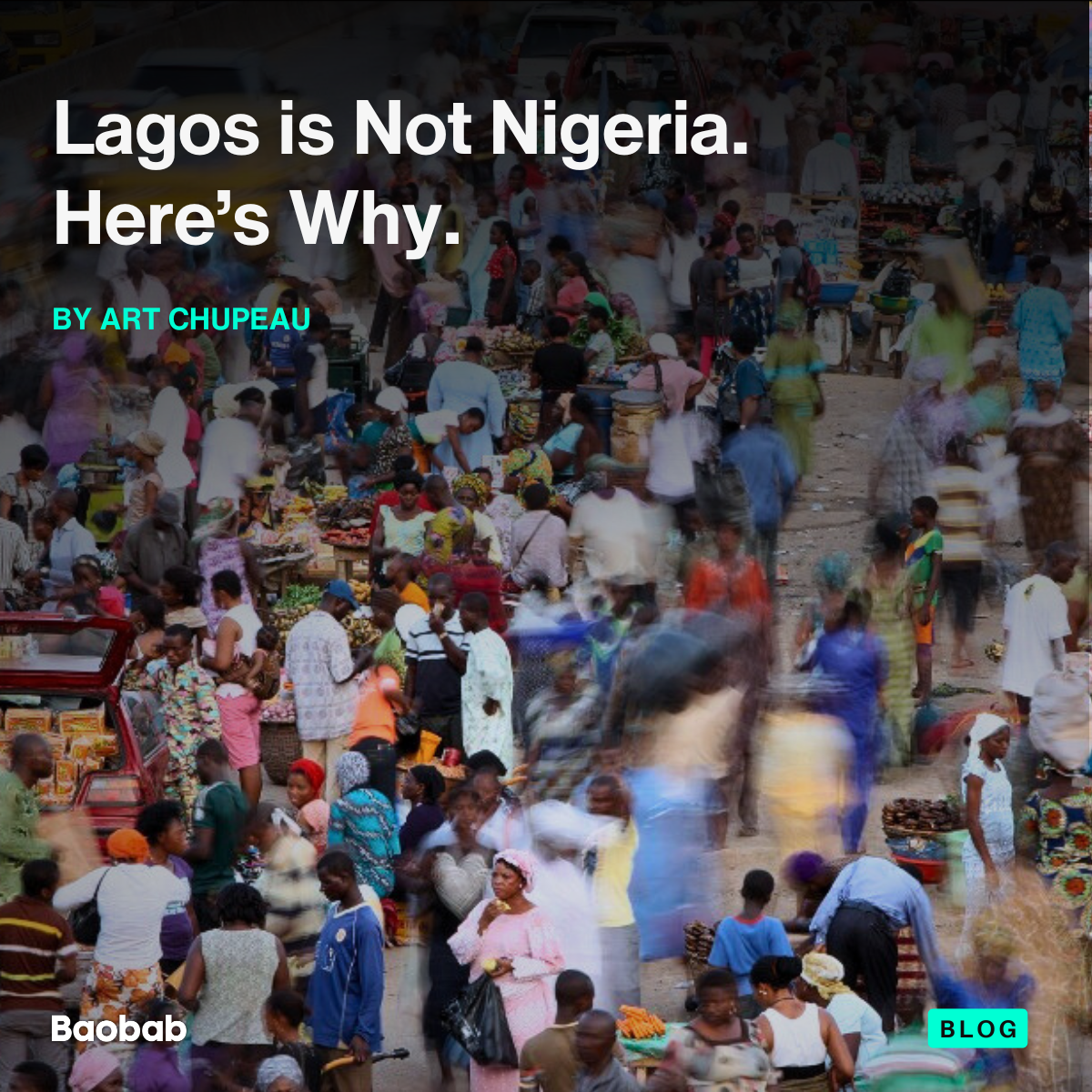
To outsiders, Lagos is Nigeria. To Lagosians, that’s a lie.
I was reminded of this during my third trip to Lagos this year, this time for GITEX Nigeria. At Baobab Network, almost a third of our portfolio companies are based in Nigeria. Momentum in Africa’s startup story is often Lagos-driven, so my writing usually leans toward business and hustle. But this trip, I wanted to pause. Instead of balance sheets and term sheets, I wanted to ask: What is Lagos culture and identity?
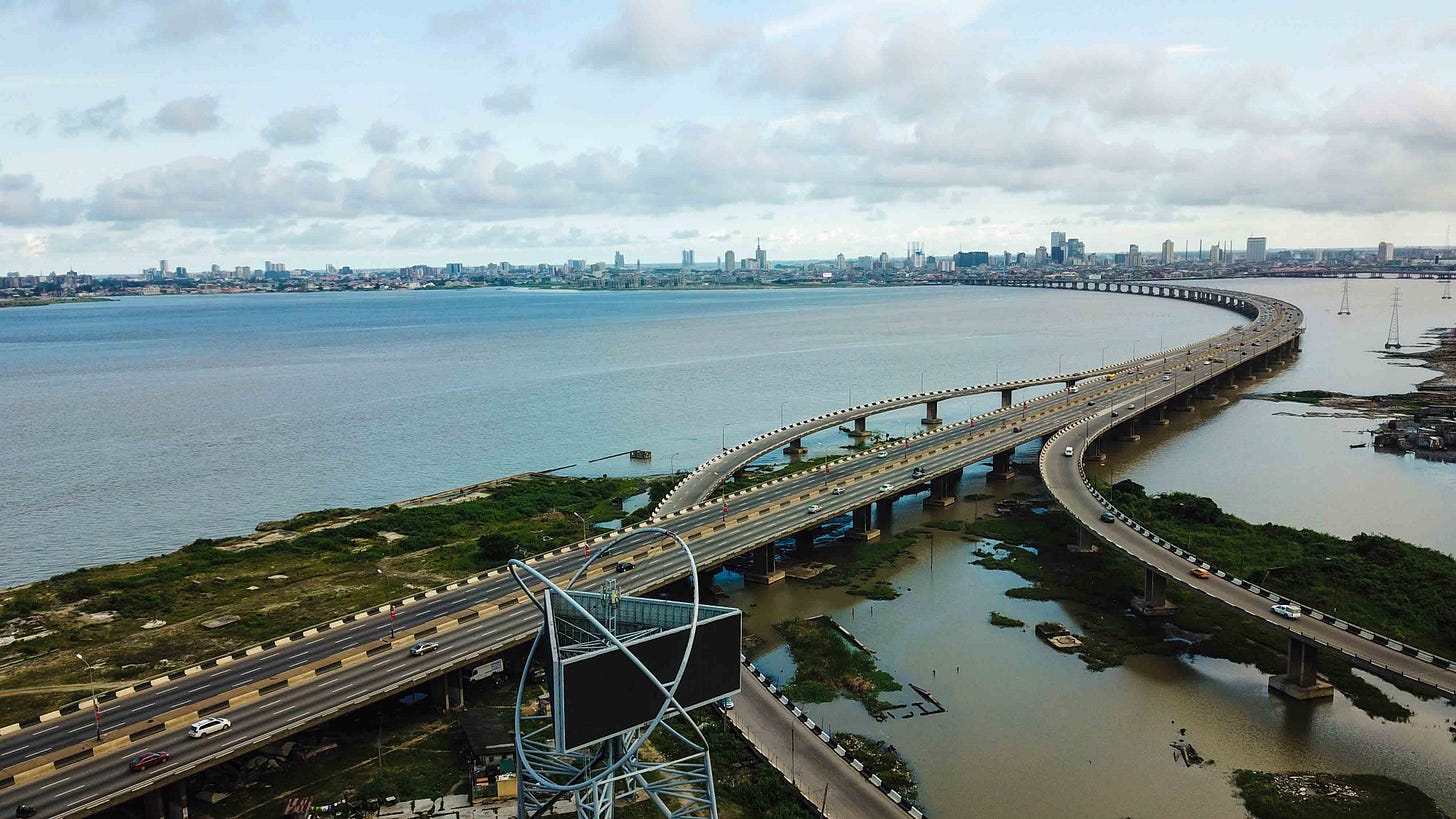
The Third Mainland Bridge, in Lagos.
On my drive from the airport, I couldn’t miss the suya shops or jollof fast food chains glowing across the streets. Earlier this year, I even “attended” the University of Suya, a fast food joint dedicated to grilled meat “suya” in Ikeja, the capital of Lagos state. Suya is a popular Nigerian street food consisting of marinated, spice-coated meat, typically beef, ram, or chicken, skewered and grilled over a coal fire. Give it a try when you’re next in Nigeria.
Lagos in Numbers and Layers
Nigeria is Africa’s most populous country with more than 220 million people and over 250 ethnic groups. Lagos State alone is projected at ~17.16 million people in 2025, while the greater metropolitan area is closer to 24.4 million, making it Africa’s largest city.
The indigenous people of Lagos are Yoruba, one of Nigeria’s three largest tribes (along with Hausa and Igbo). Yoruba make up around 21% of Nigeria’s population, Hausa about 25%, and Igbo roughly 18%.
In Lagos you’ll hear Hausa traders bargaining, Igbo entrepreneurs running markets, Yoruba families anchoring neighborhoods, and foreigners testing opportunities. Lagos contains all of Nigeria, but at its root, it remains Yoruba.
Danfo buses in Lagos together with street merchants and pedestrians.
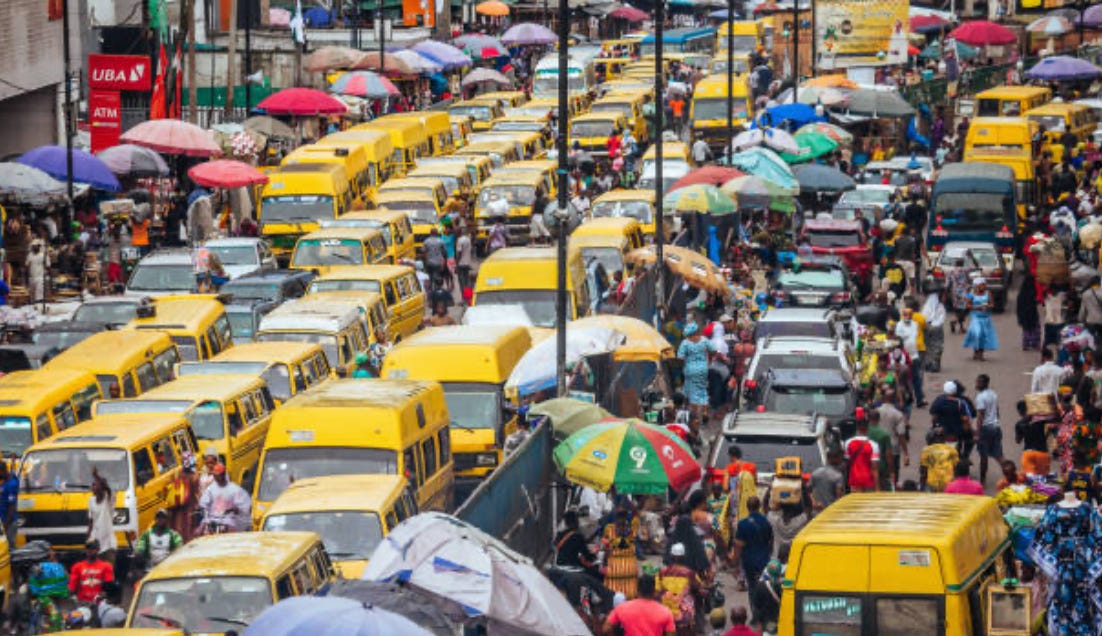
And then, there is Lagos traffic. It can be unpredictable, sometimes notorious: drivers will insist you leave hours early for the airport, stories abound of 10-hour jams that end with people sleeping in roadside hotels. I once got caught for “just” two hours, fuming, until my host laughed: “Beginner’s luck!” Lagos traffic isn’t just a nuisance; it’s part of the city’s theatre.
Perhaps that is why many Lagosians, especially the affluent, rely on drivers. Imagine being stuck one, two, even three hours per day in traffic. Without a driver, that is productivity lost. With one, it becomes a rolling office.
Lagos traffic isn’t just a nuisance; it’s part of the city’s theatre.
Yoruba Voices: Rootedness and Reinvention
The Yoruba are the indigenous people of Lagos. Their identity is tied not just to ancestry but to language, greetings, and ọmọlúàbí, a philosophy of character and respect.
Seun, a Lagos-based lawyer and investor, reminded me that for many families, Lagos itself has become the “village”:
“My father’s side hails from Ogun, my mother’s from Kogi, but neither kept ties. Lagos is their Yoruba village. Even if I don’t speak Yoruba fluently, I feel it through family, community, and the history around me.”
Dolapo, an entrepreneur, framed Yoruba identity in Lagos through ọmọlúàbí:
“Yoruba to me is ‘ọmọlúàbí,’ respect in how we greet, how we treat elders, how we keep community. In Lagos, even in the chaos, that glue still holds.”
Bidemi, a start-up founder who grew up in Abuja, offered a counterpoint:
“I call Lagos a no man’s land. Everyone comes, and everyone blends. You can’t miss Yoruba culture, but the city absorbs people until they become Lagosians.”
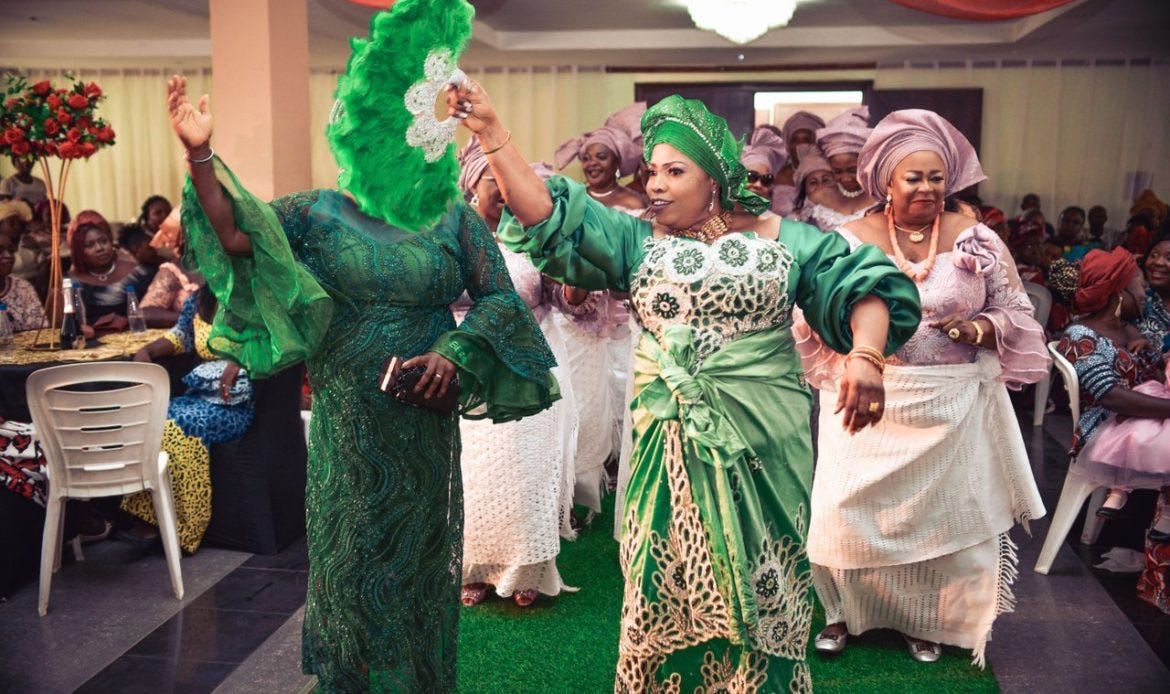
Though I’ve visited Lagos many times, I’ve never been invited to an owambé. It’s a reminder of how big the city is, many layers, many circles, and some parts of Yoruba Lagos remain just beyond my reach (for now).
A group of ladies wearing Aso ebi attire at an owimbé party.
Igbo Voices: Hustle, Diaspora, and Lagos as Stage
If Yoruba Lagosians debate whether the city is still theirs, Igbo Lagosians often describe it as an amplifier of ambition.
Amaka, a British-born lawyer of Igbo heritage, compared Lagos to global melting pots:
“It’s cosmopolitan. Yes, Yoruba at its roots, but Lagos belongs to everyone who dares to test their dreams here.”
Binta, a fintech entrepreneur sharpened the point:
“Being Igbo means industriousness and nurturing. Lagos sharpened that into something bigger. A blend of city hustle and Igbo drive. I call it Igbo Promax.”
Udi, a tech founder, is more pragmatic. He sees tribe as less defining than class:
“Lagos experience is more about money than tribe. A wealthy Igbo, Hausa, or Yoruba person will live the same Lagos life. Tribe shows less, lifestyle shows more.”
I remember meeting Binta at GITEX. She spoke about her start-up’s ambition, why Lagos made sense, and how only this city could match the scale of her vision. It was Igbo drive meeting Lagos stage.
Religion in Public, Faith in Private
Religion is everywhere in Lagos. Churches and mosques share fences, prayer circles happen in office car parks, crusade billboards dot expressways.
Dolapo finds Christianity an anchor:
“You hear worship in traffic at 6 a.m. Praising God in Yoruba hits different. It makes faith feel closer and honest.”
Bidemi describes overlap: Yoruba traditional engagements beside church weddings, families with both pastors and imams.
Seun admits he keeps his distance from organised religion, while Binta notes that in Lagos, faith often feels louder in public than deeper in practice.
On one trip earlier this year, I woke to church service blasting through my hotel room at 5:30 a.m. Later that same day, I heard the azan from a mosque across the road. Lagos doesn’t offer silence.
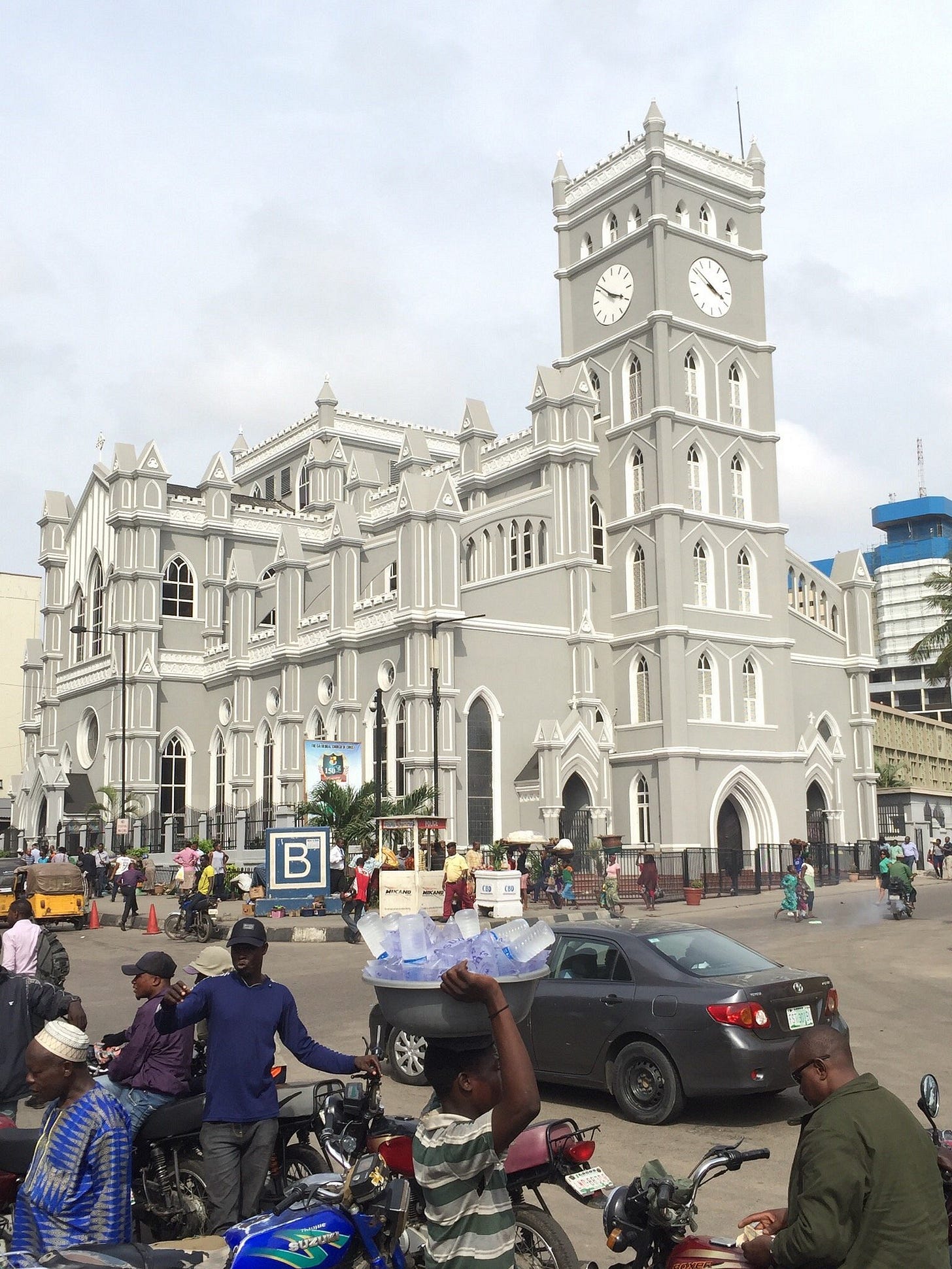
The Cathedral Church of Christ in Lagos.
Everyday Lagos: From Danfos to Nightlife
I ask Lagosians what a visitor must do in three days and here are some of the answers: eat amala (a staple swallow food made of yam, cassava flour, or unripe plantain flour, big in the Yoruba cuisine) at a buka (street food joint), ride a danfo bus (yellow commercial private buses moving Lagosians every day), wander Balogun market (busy open-air market), dance at an owambé (parties often extravagant amongst Yoruba people).
Some highlight nightlife: Afrobeat lounges, live bands, Island clubs. Others say the chaos of CMS buses or Mile 12 market is more authentic.
Everyday Lagos is also in its unpredictability. Once, I experienced long traffic, then finally reached my meeting place only for the power to go out. It frustrated me at first, then amused me; because Lagosians laughed it off. That resilience is as much culture as food or music.
And it is here, in this mix of buka food, nightlife, and Lagos humour, that Chapman belongs.
Chapman: The Liquid Lagos Metaphor
A Chapman is not wine, not juice, not soda. It’s a non-alcoholic cocktail of Fanta, Sprite, Angostura bitters, grenadine, and fruit slices. Sweet, fizzy, refreshing — perfect for the humid Lagos weather. It’s also universal: everyone can enjoy it, whether in a buka or a bar, at an owambé or a boardroom mixer.
I ordered my first Chapman at a small bar in Victoria Island. The bartender asked whether I wanted more bitters or more fruit. The way sweetness, bitterness, and fizz collided in that glass felt like Lagos itself, startling, surprising, wholly joyful.
A Chapman, cocktail easily find in any hotel/restaurants in Lagos.

Takeaway: Lagos at Its Core
So, what is Lagos?
It is Yoruba greetings and owambé parties. It is Igbo apprenticeship sharpened into Igbo Promax. It is Hausa traders, Fulani migrants, diasporans returning for December. It is religion lived out loud, danfo rides, street suya, and Chapman glasses.
Nigeria is hyper-diverse with more than 250 tribes. Lagos contains all of them, but it is not Nigeria. It is Lagos, a Yoruba-rooted megacity, constantly reinvented by those who arrive, blend, and leave their mark.
One thing missing: I could not interview anyone of Hausa heritage on this trip. Next time, I promise to make a stronger effort to capture voices from the Hausa community; one of Nigeria’s three largest tribes, and a vital part of Lagos.
Lastly, next time you meet a Nigerian, don’t ask if they’re Igbo, Yoruba, or Hausa. Ask them where to find the best Chapman in town. You’ll get a smile — and maybe an invitation. 🙂 🇳🇬