
After a few days in Zambia driving through Lusaka, speaking with business leaders, consultants, lawyers, tech founders and my ever-trusty taxi drivers, one thing is clear: Zambia today isn’t where it was in 2021. But it’s also not quite where it could be.
This is a country on the edge of something. Whether that’s a resurgence or another political shuffle remains to be seen. Here’s what I picked up.
Macro: Quiet Progress, Cautious Optimism
Zambia’s macroeconomic story walks a fine line. Important structural moves have been made, but most citizens aren’t feeling the lift, at least, not yet.
- Debt restructuring is underway following the 2021 Eurobond default. The long and complex process has sparked cautious optimism among the business community.
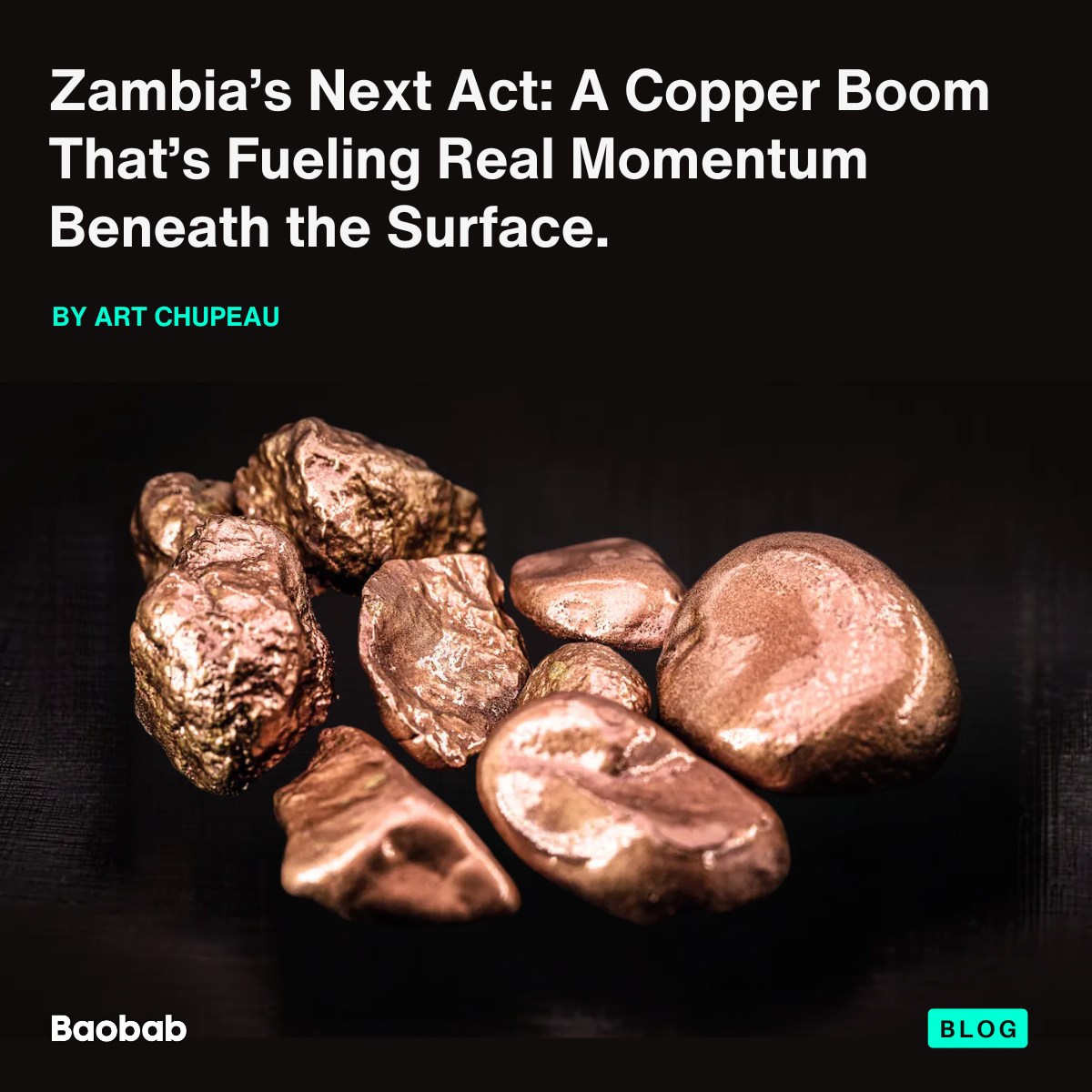
- Mining is recovering, with copper and even gold production on the rise. One executive described the investment push in the “New Copperbelt” as the most exciting industrial momentum in decades.
- Still, everyday life remains tough. Inflation may have stabilized in recent months, but prices for essentials like mealie meal and fuel are high.
One business person I met told me:
“The President is a businessman. He’s making money, but he doesn’t block others from doing the same.”
Zambia is open for business, but for now, the benefits haven’t been evenly felt across.
Politics: Calm Before the 2026 Storm?
Elections are scheduled for August 2026, and the political atmosphere is already starting to shift.
The government has recently reduced prices on basic commodities like mealie meal, citing improved maize supply and lower input costs. However, many suspect pre-election subsidies may quietly be making a return, a common feature in election cycles.
On the ground, there’s little concern about serious opposition (from people I talked to at least, but most of them where from certain economic class; I’m sure in more popular areas the vibe might different). The current administration is seen as stable and business-friendly, albeit with room for improvement.
As one advisor put it:
“Things are much better than in 2021, but they could still do better.”
Expect more tactical moves in the lead-up to 2026, fuel price drops, policy nudges, and economic relief measures. But whether these translate into long-term structural change remains to be seen.
Business & Investment: New Copperbelt, Old Challenges
Across nearly every conversation, from top legal advisors to local business operators, three themes kept resurfacing: mining, consumer activity, and capital.
Mining remains the heartbeat of Zambia’s economy. With fresh international interest in copper and gold, the sector is gaining momentum. One executive captured it well:
“If the mining sector sneezes, everyone catches a cough.”
Meanwhile, consumer confidence shows subtle signs of recovery. A business leader pointed to supermarkets and breweries as reliable barometers of spending habits “and they’re doing well,” he noted. It’s a small but telling signal of economic resilience among Zambia’s growing middle class.
But a major bottleneck persists: access to long-term, affordable capital for infrastructure and ecosystem development. While core mining operations are attracting foreign investment, many surrounding opportunities such as transport, housing, energy require financing that is still hard to come by.
Much of the capital available is either short-term in nature or risk-sensitive, making it difficult to match Zambia’s long-dated infrastructure needs with patient funding. Unlocking the right kind of capital will be critical to fully realizing the potential of the New Copperbelt.
Zambia’s population of roughly 20 million is expected to grow significantly over the next two decades, presenting an enormous opportunity for consumer-led and infrastructure-driven growth.
Yes, the above is often said about African markets 😅, but in Zambia’s case, the macro, demographic, and investment signals do seem to be aligning.
Weather, Waterfalls, and Economic Fragility
This year brought heavy rains, a win for the country’s stunning tourism assets, including the mighty Mosi-oa-Tunya (“The Smoke That Thunders,” known to many as Victoria Falls), which was full and roaring when I visited (on a previous trip).
But weather isn’t just about waterfalls.
A severe drought two years ago heavily disrupted hydroelectric power generation, forcing major load shedding and energy shortages across the country. The impacts were widespread crippling agriculture, manufacturing, and even mining operations.
In a country where over 85% of electricity comes from hydropower, the lesson is clear: no rain means no power, and no power means no growth. Zambia’s vulnerability to both climate shocks and energy insecurity remains a real economic risk.
Final Thought: A Market in Transition
Zambia feels like a market in quiet transition. The groundwork of debt resolution, investment in mining, and relative political calm is in motion. But momentum alone isn’t enough.
The question now: Will it translate into widespread, inclusive growth? And will investors be willing to play the long game?
To those watching from afar: this is a country where seeds have been planted. Now we wait to see what will grow.
Who’s building in Zambia? Who’s backing the New Copperbelt and beyond? Who’s backing tech companies in Zambia and the region. Let’s talk.